

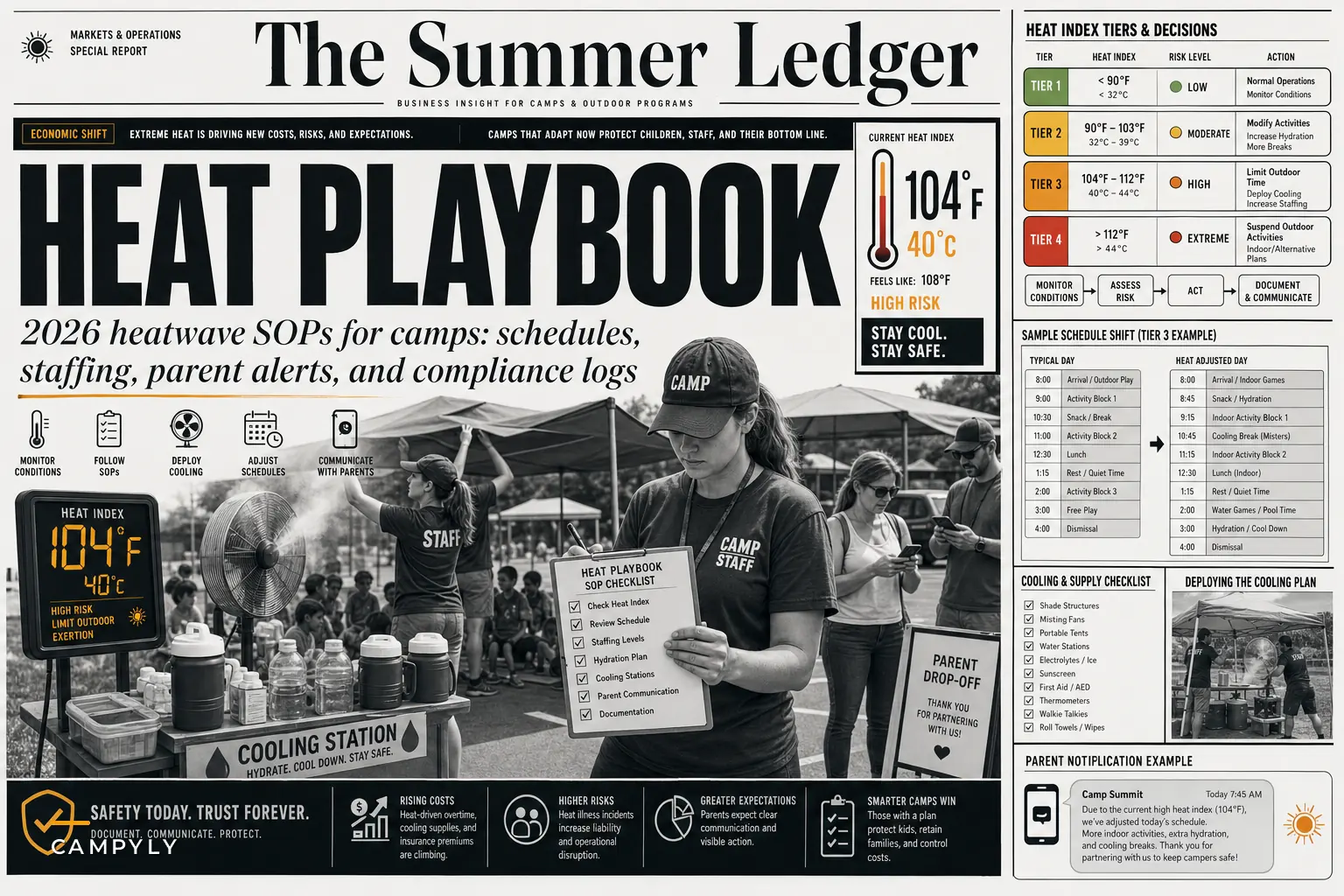

The heat dome gripping the eastern U.S. right now isn't just breaking temperature records—it's breaking camp operations across the country. Reuters reports that over 175 million Americans face excessive heat warnings through the July 4th weekend, with temperatures climbing past 105°F in regions where camps typically run outdoor programs all day.
This week alone, I've fielded calls from three camp directors dealing with heat-triggered staff walkouts, two overnight camps scrambling to source portable cooling units, and one day camp that had to issue $14,000 in prorated refunds after canceling Thursday and Friday sessions with zero contingency plan in place.
The heat itself isn't the core problem. The problem is that most camps built their operational playbooks assuming normal July weather—schedules locked in January, staff ratios calculated in March, parent communication templates written years ago. When temperatures spike to dangerous levels, those rigid frameworks fall apart fast.
The scheduling trap that kills your heatwave response
Most camps run something like this: 9am arrival, outdoor activities until noon, lunch, more outdoor activities, 3pm pickup. Simple, predictable, effective under normal conditions.
When heat indices push past 95°F by 10am, that same schedule becomes a liability lawsuit waiting to happen.
The camps handling this heat wave well aren't the ones with the biggest budgets or the most staff. They're the ones who built modular schedules that can shift on 24 hours notice. One Connecticut day camp I work with restructured their entire week using what they call "heat threshold triggers"—specific temperature and humidity combinations that automatically activate alternate schedules.
Their system breaks down into three tiers:
Tier 1 (Heat index 85-94°F):
-
Shift high-intensity activities to 7
30-9:30am window
-
Add mandatory water breaks every 25 minutes
-
Move creative and low-movement activities to peak heat hours
-
Extend quiet/indoor time from 45 to 90 minutes
Tier 2 (Heat index 95-104°F):
-
Open early drop-off at 7am (no extra charge)
-
Eliminate all field sports between 11am-3pm
-
Convert outdoor stations to indoor alternatives
-
Deploy portable cooling stations at remaining outdoor areas
-
Implement buddy system for all transitions
Tier 3 (Heat index 105°F+):
-
Indoor-only operations except pool time
-
Staggered pool rotations every 45 minutes
-
All-hands medical monitoring protocol
-
Parent notification system activated
-
Automatic next-day schedule adjustment based on forecast
Here's a quick workflow visualization of the threshold-trigger schedule.
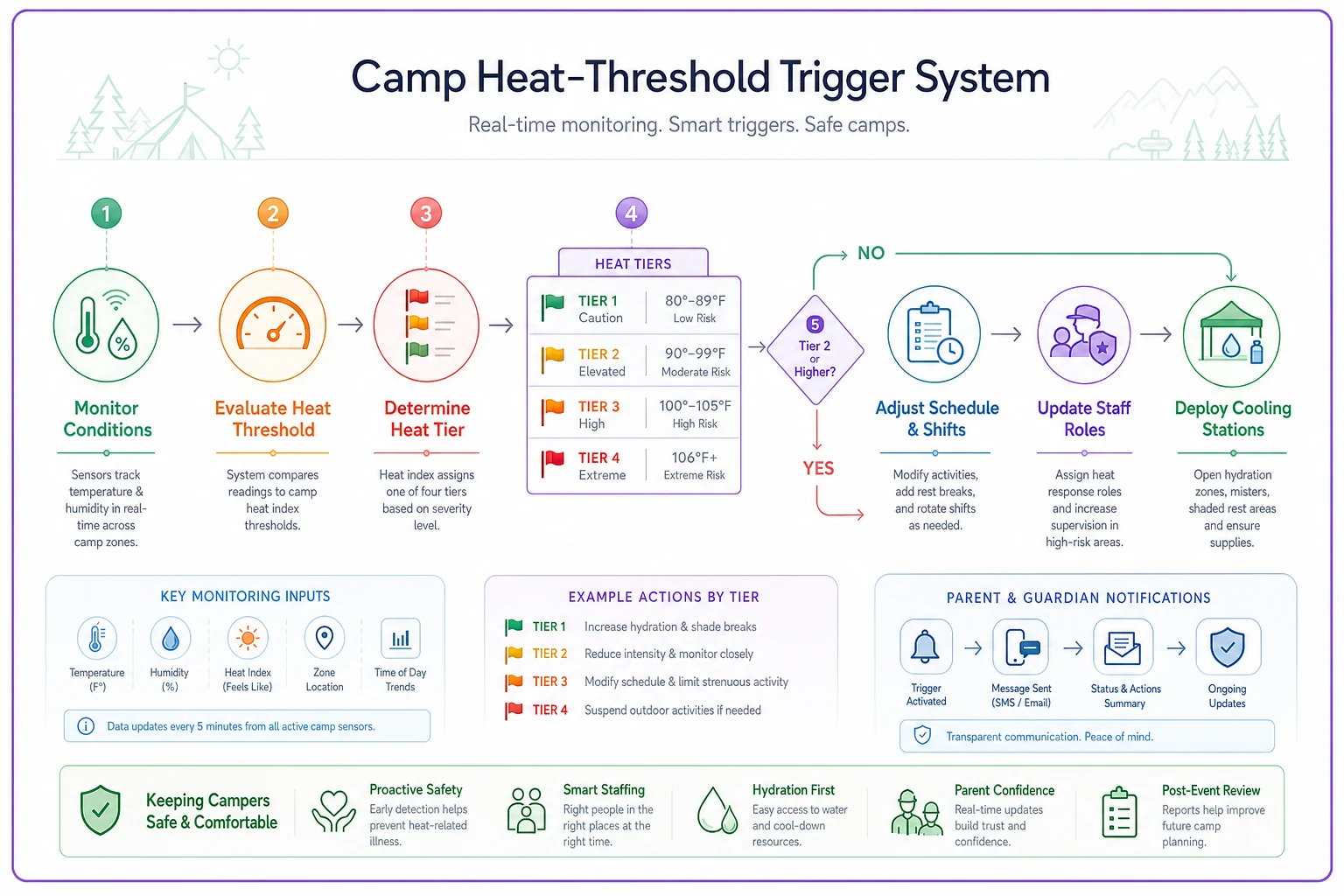
What makes this work isn't the specific temperatures—it's that every counselor knows exactly what changes when each threshold hits. No scrambling, no conflicting instructions, no panicked group texts at 6am.
Staffing math that falls apart in extreme heat
Your carefully calculated 1:8 counselor ratios assume all your staff show up and maintain normal energy throughout the day.
Simplify camp operations with centralized control.
Campyly empowers you to manage registrations, staff, and activities seamlessly—all from one platform.
- Integrated camper and staff management
- Automated notifications and alerts
- Dynamic scheduling and resource allocation
No credit card required
Heat changes both variables.
A Maryland overnight camp found this out the hard way last Tuesday. They started the week with 32 counselors for 240 campers. By Wednesday, they were down to 26—three called out sick, two left mid-shift with heat exhaustion, one quit via text at 11pm citing unsafe working conditions.
The standard response is to redistribute campers among remaining counselors, but that creates a cascade failure. Overloaded counselors in extreme heat make more mistakes, miss hydration cues, burn out faster. By Thursday, that same camp had four more staff requesting to leave early.
The camps surviving this built their staffing models differently. They operate with what I'd call "degraded capacity planning"—running numbers that assume roughly 25% productivity loss in extreme conditions.
In practice, that means:
-
Scheduling 30% more floaters during heat advisory weeks
-
Reducing activity group sizes from 16 to 12 kids
-
Creating "cooling shift" rotations where counselors get 20-minute AC breaks every two hours
-
Bringing in temporary medical support (EMTs or nursing students) for $200-300/day
-
Pre-negotiating with part-time staff for emergency availability
One Texas camp network goes further—they maintain relationships with local college athletic programs and pay student athletes $150/day to serve as "hydration coaches" during heat waves. These aren't counselors. Their only job is monitoring water intake, recognizing heat stress symptoms, and rotating ice packs at activity stations.
Pre-negotiate emergency pay and roles with local colleges so you can call replacements quickly when heat-related callouts spike.
These aren't counselors. Their only job is monitoring water intake, recognizing heat stress symptoms, and rotating ice packs at activity stations.
Parent communications that prevent panic and litigation
The worst time to explain your heat safety protocols is after a kid passes out.
Most camps treat extreme weather communication as an afterthought—a generic "we're monitoring the situation" email that tells parents nothing about what actually changes or what they should expect.
The camps avoiding parent meltdowns during this heat wave share three communication habits:
1. They communicate changes, not weather updates
Parents can check weather apps themselves. What they need from you is specifics. A strong heat advisory message looks like:
"Tomorrow's forecast triggers our Tier 2 heat protocol. This means:
-
Pool time increases from 45 to 90 minutes
-
Outdoor sports replaced with indoor alternatives
-
Additional nurse on-site from 11am-3pm
-
Pickup available starting at 2pm (no early pickup fee)
-
All campers required to bring 2 water bottles (we'll provide if needed)"
2. They acknowledge the disruption explicitly
One New Jersey camp sent this: "We know this isn't the week of adventure sports and capture the flag you signed up for. This heat is forcing us to prioritize safety over our normal programming. Here's exactly what your camper will do instead..."
That message generated 47 thank-you replies and zero complaints.
3. They provide proof of action
Smart camps document their heat response visually. Photos of cooling stations being set up, counselors distributing electrolyte popsicles, kids enjoying unexpected indoor activities. This isn't marketing—it's evidence that you're actively managing the situation, not just sending emails about it.
The communication cadence matters too. During extreme heat, successful camps send:
-
Night-before preview of next day's modified schedule
-
Noon update confirming afternoon plans
-
End-of-day recap with any incidents—even minor ones—transparently reported
This connects directly to the emergency communication frameworks camps should already have built. The protocols in our parent communication runbook for on-site emergencies become even more important when you're managing weather-related program changes on a daily basis.
The supply chain scramble nobody plans for
Three days into this heat wave, every Walmart within 50 miles of Philadelphia was sold out of portable fans. Sports drinks disappeared from Sam's Club shelves. Electrolyte powder prices on Amazon jumped roughly 40%.
Camps depending on just-in-time supply runs found out fast they couldn't get what they needed.
The prepared camps pre-positioned supplies in May, treating heat wave readiness like hurricane prep. Their shopping lists included:
Immediate needs:
-
2 gallon water jugs per 10 campers per day
-
1 electrolyte drink per camper per day
-
Cooling towels (3 per activity station)
-
Portable shade structures ($300-500 each, need 4-6)
-
Battery-powered fans ($40 each, minimum 10)
-
Kiddie pools for foot soaking stations ($25 each, one per 30 campers)
Medical supplies:
-
Instant cold packs (100+ units)
-
Thermometers (infrared, one per group)
-
Pedialyte/electrolyte powder (bulk quantities)
-
Additional first aid supplies for heat-related issues
Backup equipment:
-
Portable AC units (rental relationships established in advance)
-
Generator capacity for cooling stations
-
Extra indoor activity supplies to replace outdoor programs
One Pennsylvania overnight camp spent around $8,000 on heat prep supplies in May. This week, they're the only camp in their region running full capacity without parent complaints. A competitor 20 miles away spent closer to $14,000 on emergency supply runs—when they could even find what they needed.
Transportation chaos during extreme heat
Nobody thinks about buses until they break down.
In extreme heat, vehicle problems multiply. AC systems fail under continuous load. Engines overheat on long pickup routes. Vinyl seats become burn hazards. One driver told me their steering wheel was too hot to grip comfortably even with the AC running full blast.
But the bigger issue is timing. Standard pickup routes that work fine at 3pm get dangerous at 4:30pm when temperatures peak. Kids waiting at stops without shade, parents stuck in hot cars, counselors managing irritable groups in parking lots.
Staggered dismissal windows: Instead of everyone leaving at 3pm, they offer 2pm, 2:45pm, and 3:30pm slots. Parents select weekly. This cuts bus loads by around 40% and eliminates most of the waiting-in-heat problem.
Shortened routes: They split normal 45-minute routes into 25-minute segments, returning to camp between runs to cool down buses and rotate drivers.
Hydration protocol: Every bus carries a cooler with water and ice. Kids drink before boarding, mandatory water break at 15 minutes, hydration check on arrival.
Parent pickup priority: They actively encourage parent pickup during heat waves, even offering a $5/day credit. Fewer kids on buses means better monitoring and faster routes for everyone.
When to pull the plug: cancellation triggers that protect everyone
The hardest decision facing camp directors this week isn't how to modify programs—it's whether to run them at all.
Most camps lack clear cancellation triggers. They wake up, check the weather, have a rushed call, and make a gut decision. This leads to inconsistent choices that frustrate parents and leave staff confused about expectations.
The camps handling this best established specific cancellation criteria in their parent handbooks:
Automatic cancellation triggers:
-
Heat index forecast above 110°F at any point during operational hours
-
Power failure affecting AC in 50% or more of indoor spaces
-
Water supply interruption lasting more than 2 hours
-
Less than 70% minimum staff available (accounting for heat-related callouts)
-
County or state heat emergency declaration
Partial program triggers:
-
Overnight camps
cancel day activities but maintain overnight supervision
-
Day camps
half-day only, must pickup by noon
-
Specialty programs
cancel high-intensity activities only
The financial side matters too. One Vermont camp network built their refund policy around weather interruptions:
| Refund policy | Credit |
|---|---|
| Full day cancellation | 100% credit toward future date |
| Half day cancellation | 50% credit |
| Modified program (indoor only) | No credit but $10 "inconvenience voucher" for camp store |
| Three cancellations in one session | Option to transfer to a later session or fall programs |
They've processed around $31,000 in weather-related credits this week without a single complaint or chargeback.
Technology and systems that scale your heat response
Manual coordination falls apart when you're adjusting operations hourly.
The camps maintaining control are using operational platforms to centralize their heat response—tracking camper hydration logs digitally, running automated parent messaging for schedule changes, monitoring counselor break rotations through scheduling tools, and keeping real-time capacity dashboards visible to supervisors.
One day camp in Georgia built their entire heat response into their operational software. Temperature data feeds trigger automatic schedule adjustments. Staff get mobile notifications about break rotations. Parents receive customized updates based on their camper's group. The medical team tracks heat-related incidents in real-time rather than on paper clipboards that get shuffled around.
That same platform manages their supply inventory, flagging when they're running low on electrolyte drinks based on current consumption rates. It calculates refund amounts automatically when programs get canceled. It even generates compliance reports for state inspectors—who have been making rounds during the heat wave.
The difference between camps with and without proper operational software this week is pretty stark. Manual camps are drowning in spreadsheets, group texts, and paper logs. Camps with centralized systems are spending that energy on actual camper care instead of administrative chaos.
The compliance documentation you need before inspectors arrive
State health departments are conducting surprise inspections at camps across the affected regions. They're looking for evidence of heat illness prevention protocols, documented staff training, hydration logs, and incident reporting.
One Connecticut camp got hit with a $5,000 fine recently. Not because they had heat-related incidents—because they couldn't produce documentation showing they'd trained staff on heat emergency procedures.
The camps passing inspections maintain:
Daily operation logs showing:
-
Temperature readings at 2-hour intervals
-
Schedule modifications with timestamps
-
Hydration break compliance by group
-
Cooling station deployment times
-
Staff rotation schedules
Incident tracking including:
-
All heat-related symptoms reported (even minor ones)
-
Treatment provided
-
Parent notifications sent
-
Follow-up actions taken
Training documentation covering:
-
Heat illness recognition training dates
-
Staff members present
-
Certification copies where applicable
-
Protocol acknowledgment signatures
This documentation isn't just about avoiding fines. When a parent threatens legal action because their kid got overheated, these records are your primary defense.
Looking beyond this heat wave
This won't be the last extreme weather event hitting during camp season. CNN's climate coverage makes pretty clear that summers like this are becoming more frequent, not less.
The camps struggling most this week built rigid operational models that assumed perfect conditions. The camps managing it well built flexibility into their core systems—modular schedules, excess staff capacity, robust supply chains, clear decision triggers, and centralized platforms that can adapt in real-time.
Build these systems now, during the crisis, while the pain points are obvious. Document what works and what doesn't. Calculate the true cost of being unprepared—not just refunds and emergency supply runs, but reputation damage and enrollment impact heading into next summer.
The parents choosing camps for 2027 will remember which programs handled this heat wave professionally and which ones melted down. The infrastructure you build this week will determine whether the next extreme weather event is an expensive disruption or just another operational adjustment.
This won't be the last extreme weather event hitting during camp season. CNN's climate coverage makes pretty clear that summers like this are becoming more frequent, not less.
The camps struggling most this week built rigid operational models that assumed perfect conditions. The camps managing it well built flexibility into their core systems—modular schedules, excess staff capacity, robust supply chains, clear decision triggers, and centralized platforms that can adapt in real-time.
Build these systems now, during the crisis, while the pain points are obvious. Document what works and what doesn't. Calculate the true cost of being unprepared—not just refunds and emergency supply runs, but reputation damage and enrollment impact heading into next summer.
The parents choosing camps for 2027 will remember which programs handled this heat wave professionally and which ones melted down. The infrastructure you build this week will determine whether the next extreme weather event is an expensive disruption or just another operational adjustment.
Ready to elevate your camp management?
Join 500+ camps using Campyly to save administrative time, enhance camper experiences, and streamline daily operations.